

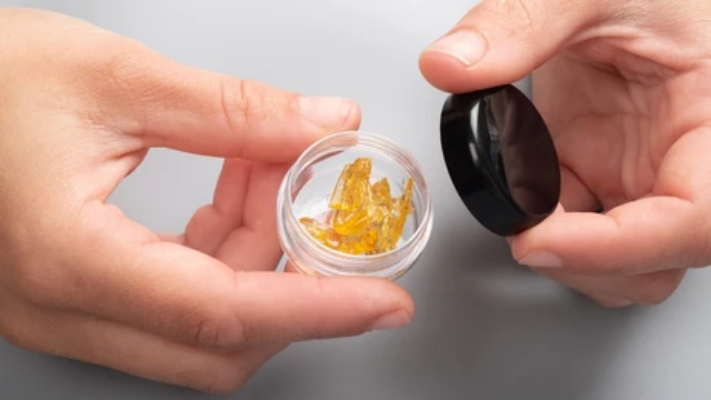
Solventless extracts create high quality concentrates without the use of solvents like butane or ethanol. Many consumers flock to solventless extracts for their purity and potency, as some compounds may be affected by the solvent-based extraction process. What makes these so unique? This guide to solventless extraction pulls the curtain back on how these products are made and the kind of flower that makes for optimal solventless extracts.
The basics of solventless extraction
A solventless extract is any type of cannabis concentrate product produced using heat, pressure, ice, or water to mechanically separate trichomes from biomass. The collected trichomes, which are densely packed with cannabinoids and terpenes, can then be used to produce concentrates or extracts.
Solventless extraction methods in the modern sense are relatively new, but the concept behind it dates back to ancient civilizations. The earliest forms of hash can be traced back to Persia and Central Asia, made by simply rubbing cannabis flower to gather trichomes and resin and press it into a brick. Later down the line, the development of sieves allowed manufacturers to more effectively separate trichomes from the plant and produce even purer versions of hash.
Today, manufacturers are able to take these principles of mechanical separation to a new level by using modern extraction technologies and processes. This allows them to not only produce highly potent varieties of hash, but also turn them into solventless extracts like rosin.
What is the difference between solvent-based and solventless extraction?
Solvent-based extraction relies on the use of a solvent like the hydrocarbons butane and propane or the alcohol ethanol to separate cannabinoids and terpenes from the plant material. Solventless processes do not require the use of solvents at all. In most cases, means of mechanical separation, heat, and pressure are used to produce extracts.
The key difference in the final product is that solventless extracts will contain no residual solvents at all. Solvent-based extracts are generally purged and refined to remove lingering solvents, which can result in an unpleasant aftertaste. In the most egregious cases, trace amounts of solvent may be detected on a lab test and make these concentrates ineligible for sale at a dispensary.
During the purging process of solvent-based extracts, the extract is exposed to some level of heat; the precise temperature depends upon which solvent is used. Skipping this process allows solventless extract manufacturers to preserve terpenes during extraction, which degrade when exposed to heat. The end result is a more flavorful and aromatic extract that may offer additional therapeutic benefits thanks to the entourage effect.
Is solventless extraction better?
Solventless extracts are considered a premium product because they typically offer higher terpene content than their solvent-based counterparts, delivering the natural taste and smell of the plant. This makes solventless extracts a top choice among cannabis consumers who like to try different cultivars and compare the overall experiences. You can also be sure solventless extracts contain no residual solvents, which reduce the quality of the extract. At the end of the day, it comes down to your personal preferences. There are plenty of solvent-based extract lovers out there, as well as fans of solventless extraction.
What about “solvent-free” products?
Note that you may sometimes see labels that read “solvent-free.” Generally, these are not solventless extracts, but instead solvent-based extracts that have been thoroughly purged to remove any residual solvent from the final product. If you want truly solventless products, look for labels that read “solventless” or “non-solvent” instead.
What types of solventless extraction methods are there?
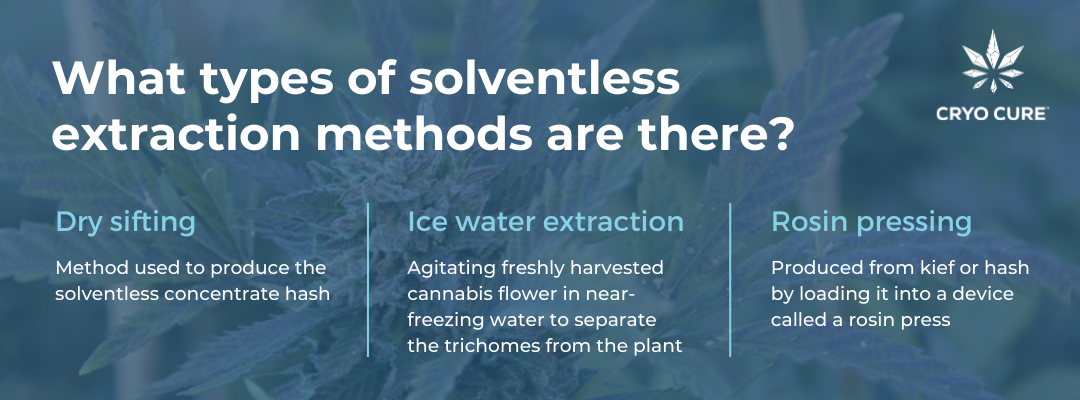
There are many solventless extraction methods out there, and as the cannabis industry innovates new processes are being developed all the time. However, there are a few common solventless extraction methods that stand out, including:
1. Dry sifting
Dry sifting is a method used to produce the solventless concentrate hash. Relying on the original principles used by ancient civilizations, manufacturers agitate dried cannabis flower over fine mesh screens, separating the trichomes from the plant material to produce kief. The kief can then be subjected to heat and pressure to be pressed into potent bricks of hash.
2. Ice water extraction
Ice water extraction involves agitating freshly harvested cannabis flower in near-freezing water to separate the trichomes from the plant. The near-freezing temperatures make the trichomes brittle and snap off when agitated in a wash machine. The separated trichomes are then sifted through a series of fine sieves to separate them from the water. Once collected, the trichomes are scraped from the sieves and allowed to dry (often using a freeze dryer) into bricks of “bubble hash.”
3. Rosin pressing
Rosin is a solventless extract that can be produced from kief or hash (usually bubble hash) by loading it into a device called a rosin press. A rosin press features two metal plates arranged like a vice grip, which are heated and then used to squeeze the bricks of hash. When pressed, a potent, viscous oil is squeezed from the hash; this is rosin.
When using fresh frozen flower, like Cryo Cure’s live resin flower, the result of this process is called “live rosin.” That’s because it contains the optimal amount of cannabinoids and terpenes, captured from flower that is preserved to remain as fresh as the day it was harvested with a superior shelf life.
What contributes to solventless extract quality?
Solventless extract quality is dependent on three major factors: the quality of the cannabis flower used as an input; the equipment used in the manufacturing process; and the techniques applied in the process itself.
Product
The final product of any extraction process is only going to be as good as the quality of the flower that goes into it. Starting with high-quality, well-preserved flower is the only way to get top quality extract. That’s why we recommend working with Cryo Cured Live Resin Flower. The flower that results from our patented process is perfectly preserved following harvest, ensuring maximum cannabinoid and terpene content remains intact before the extraction process begins.
Equipment
The equipment used in any extraction process is also critical, as it should be efficient and well-maintained. Manufacturers have access to equipment like commercial-scale agitators and rosin presses to produce potent, pure extract at scale. Processing large volumes of biomass quickly is now possible thanks to this equipment, so incorporating it into the manufacturing process is key. Additionally, maintaining, sterilizing, and cleaning equipment after each production run ensures that every batch will be the highest possible quality.
Process
Extraction is both an art and a science, and every manufacturer will have their own unique twist on the process. However, once a process is developed, it can also be standardized so it can be easily repeated. This results in reliable quality products that are the same every time, which helps to support customer satisfaction and brand loyalty. So, when a manufacturer develops a process they feel sets them apart from the competition, they can develop standard operating procedures (SOPs) so their team is able to replicate the process time and again.
Solventless extraction results in clean, terpene-rich extracts
Cannabis enthusiasts love solventless extracts for their comparatively high terpene content and the aromas and flavors they produce. Additionally, consumers who prefer a clean product can rest assured that solventless extracts contain absolutely no residual solvents, because none are needed in their production. With these benefits, it’s no surprise that solventless extracts are becoming a hugely popular choice amongst consumers in every legal cannabis market. For manufacturers who want to stand out in this growing space, making the best solventless extracts is a matter of using the best flower, which is where Cryo Cure’s Live Resin Flower comes in. To maximize flavor and potency, you can’t do better than Live Resin Flower.